
What are the latest regulations for contaminated soil management?
The management of land is not, and never can be, “just” about development. That’s because it is also about carefully navigating a complex web of environmental responsibilities.
For anyone who is responsible for land in the UK, such as landowners, developers, agricultural businesses, and infrastructure project managers, it is important that you are up-to-date with the latest contaminated soil regulations, and to adhere to these requirements.
These regulations are continuously changing in order to address modern challenges such as mixed contaminants, the need for increasingly stringent asbestos management, and the importance of the greatest possible clarity in risk assessment.
Such major practical drivers as redevelopment, agricultural use, infrastructure upgrades, and changing risk profiles are all underscoring how crucial it is to meet current standards.
In this guide, we will set out the core regulatory frameworks in relation to contaminated soil management. We will also look at recent assessment changes, and the practical steps that dutyholders must take to ensure compliance.
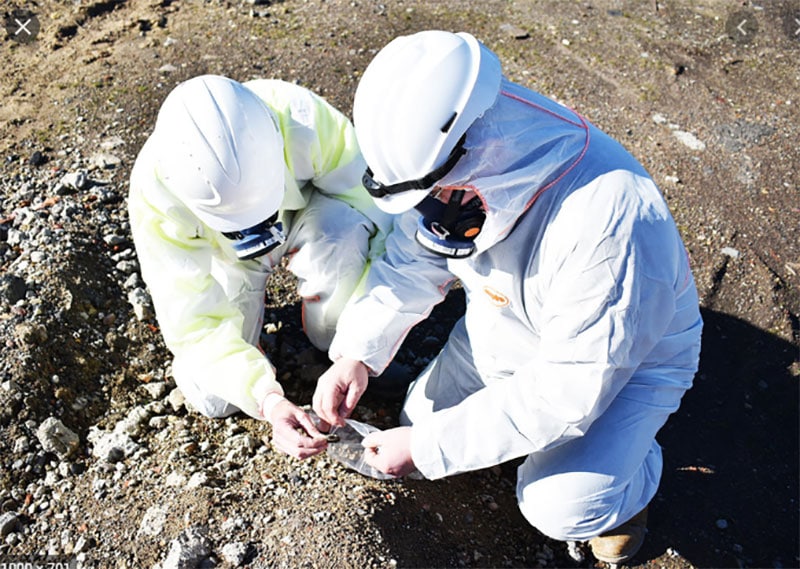
What are the core regulatory frameworks that now govern contaminated soil management?
The management of contaminated soil in the UK is not governed by a single act. Instead, stakeholders must familiarise themselves with an interconnected set of laws and detailed guidance. By establishing an understanding of how these frameworks interact, those responsible for the management of land can greatly help ensure compliance.
Here are examples of the key legislation and guidance:
- The Environmental Protection Act 1990 (Part 2A) – This is the primary UK framework defining “contaminated land” in a legal sense. It focuses on the identification and remediation of land where serious harm or pollution of controlled waters is taking place.
- The Waste Framework Directive (via UK law) – The Waste Framework Directive, or WFD, is principally known as a European Union (EU) directive. However, the UK has incorporated the directive’s requirements into its domestic laws both prior to and since its departure from the EU. The WFD dictates how excavated soil is classified, handled, transported, and disposed of. It reinforces the “waste hierarchy” of reduce, reuse, recycle, recover, dispose.
- The Hazardous Waste (England and Wales) Regulations 2005 (as amended) – These regulations stipulate strict controls for soils classified as hazardous. These include requirements for movement documentation and appropriate disposal facilities.
- The Control of Asbestos Regulations 2012 (CAR 2012) – This is the overarching legislation in relation to asbestos management in Great Britain. It outlines specific, stringent requirements for managing asbestos-containing materials (ACMs), extending to soils in which asbestos is present.
- The National Planning Policy Framework (NPPF) and Planning Practice Guidance (PPG) – These set out how contamination must be addressed during the planning application process for new developments, thereby ensuring sites are safe for their intended use.
Regulators are increasingly looking for seamless integration between these frameworks. So, for example, it won’t be enough for a given remediation strategy to “merely” satisfy planning requirements. This is because it will also need to adhere strictly to waste classification and asbestos safety rules during implementation.
How have recent updates changed the way contaminated soil must be assessed?
Recent updates in relation to the assessment of contaminated soil clarify expectations around rigour and evidence. The requirements are moving beyond simple generic thresholds, towards site-specific risk profiling.
The new expectations in risk assessment
Expectations have shifted lately with regard to preliminary risk assessments (PRAs) and conceptual site models (CRAs).
The emphasis is now on robust and detailed CRAs from the outset. Regulators expect PRAs to be thorough, clearly identifying potential pollutant linkages (source, pathway, receptor) and justifying the scope of subsequent intrusive investigations.
Updated guidance has also influenced sampling density and test methods. It is no longer sufficient to depend on outdated, generic sampling patterns. Instead, it is essential for investigation strategies to be tailored to the given site’s history. Specific attention should be paid to “hot spots” and areas where complex mixtures of contaminants might exist.
The specific requirements for asbestos in soil
The rules for the management of asbestos in soil have become significantly more stringent. The distinction between different forms of asbestos is critical for both risk assessment and waste classification.
For example, dutyholders must now robustly quantify and differentiate between bonded asbestos materials (such as cement fragments), non-bonded fragments, and potentially more hazardous free asbestos fibres.
With regard to lines of evidence for asbestos in soil, it is insufficient to solely rely on laboratory testing. Assessments must draw upon multiple lines of evidence, encompassing historical data, visual inspections, detailed sampling logs, and microscopic analysis, to determine the actual risk profile.
You might have heard that there has been a shift in the threshold in terms of whether a given site qualifies as “contaminated land”. Such a shift hasn’t necessarily occurred legally under Part 2A. However, it is true that regulators now have clearer, better-defined guidance (such as Defra’s SP1 guidance) on what constitutes an unacceptable risk. This makes enforcement easier in cases where standards are not met.
What are the current rules around classifying, handling, and storing contaminated soil?
Arguably the most common compliance hurdle is the classification of waste. It is essential to make sure waste is correctly classified, given that misclassification can lead to enforcement actions and issues with disposal.
Updated waste classification and EWC codes
It is crucial for soil to be classified using the appropriate European Waste Catalogue (EWC) codes.
You will need to be alert to the possibility of mixed hazardous soils. If, for instance, asbestos is present in such soil alongside other contaminants (such as hydrocarbons or heavy metals) above specific thresholds, the waste is likely hazardous and must be managed in accordance with strict controls.
It is important to be mindful that even very low concentrations of asbestos can render soil “hazardous” if free asbestos fibres are likely to be present, thereby necessitating specific EWC codes.
Onsite management and the waste hierarchy
Regulators expect the waste hierarchy to be faithfully applied.
It is necessary for soils to be segregated immediately upon excavation based on their classification (non-hazardous, hazardous, inert). Storage areas for hazardous materials must be secure, covered, and impermeable, with appropriate signage.
The preferred route for reusing suitable soil on-site is via a robust materials management plan (MMP) under the CL:AIRE Definition of Waste Code of Practice (DoW CoP). This ensures the material is a “product” rather than a “waste”. However, rigorous justification is required for MMPs, which are not suitable for all contaminated soils.
Chain-of-custody records
For all soil movements both on-site and off-site, it is mandatory for meticulous records, encompassing waste transfer notes or hazardous waste consignment notes, to be maintained.
How do the latest regulations affect the movement and disposal of contaminated or asbestos-impacted soil?
The movement of contaminated soil off-site for disposal is heavily regulated and subject to evolving landfill acceptance criteria.
With regard to current expectations for treatment vs disposal, it is crucial to note that regulators strongly favour treatment to reduce contaminant loads prior to disposal. This aligns with the waste hierarchy, as does the tendency for direct landfilling to often be the last resort.
As for the topic of landfill acceptance criteria, you should be aware that landfill operators require comprehensive waste characterisation reports. Changes in guidance mean that operators have become stricter about accepting soils with complex mixtures of contaminants. This is likely to mean further testing will often be required.
Certain rules apply, as well, to the transportation of soil containing asbestos. Trained carriers are necessary, and specific consignment notes must be submitted to the Environment Agency, to ensure full traceability from the site to the disposal facility.
What documentation and evidence do regulators now expect from landowners and contractors?
The need for accountability and demonstrable compliance is a central theme in the latest regulation.
It is essential, for instance, for remediation and validation reports to be comprehensive, clearly showing that agreed-upon remediation goals have been achieved. Justification must be given for any deviation.
In today’s world, regulators are becoming increasingly comfortable with digital documentation. However, records need to be secure, auditable, and readily available during site inspections or environmental audits.
If a decision is made to reuse soil on-site under CL:AIRE DoW CoP, robust justification will be required for this. The suitability of the reused soil for the receiving environment and the intended end use must be demonstrated.
Conclusion: what should dutyholders focus on to stay compliant with today’s contaminated soil regulations?
The landscape for contaminated soil management in the UK is shifting towards greater rigour, clarity, and accountability. In accordance with this, it is necessary for those managing contaminated land to modify their practices, placing strong emphasis on clear evidence, better documentation, and risk-based decision-making.
You should be looking to engage competent specialists at an early stage, while ensuring your own knowledge and understanding of the latest regulatory changes is as thorough as possible. This will greatly help to prevent delays, enforcement action, and unnecessary remediation costs.
By making sure you have a strong grasp of what “good practice” actually looks like when you are managing land with contamination potential, you can greatly help to ensure an efficient, safe, and compliant experience for everyone concerned.
Are you on the lookout for trustworthy services and expertise in relation to asbestos-contaminated land or soil? If so, please contact the Oracle Solutions team today.

Written by Jess Scott
Jess Scott has been an all-round asbestos consultant since 1996. That’s nearly 3 decades of asbestos knowledge. He spends his time sharing that knowledge with the team at Oracle and with their clients. Jess's goal is, and always has been, to use my expertise in helping people to comply with the law. This legal compliance ultimately helps to protect everyone from the harmful effects of asbestos. Jess has acted as an asbestos expert witness in legal cases and is involved in many asbestos educational activities throughout the UK.