
What are the guidelines for asbestos soil contamination assessment?
The use of asbestos has now banned in the UK for more than a quarter-century. However, this has not stopped the lethal substance from being a problem for a great many people and organisations up and down the country, especially those who are responsible for land.
After all, many sites in the UK have a history of industrial use, demolition, or waste tipping. With asbestos having been widely used in construction for the bulk of the 20th century, this fibrous silicate mineral’s fibres may be present in the ground at some sites to this day.
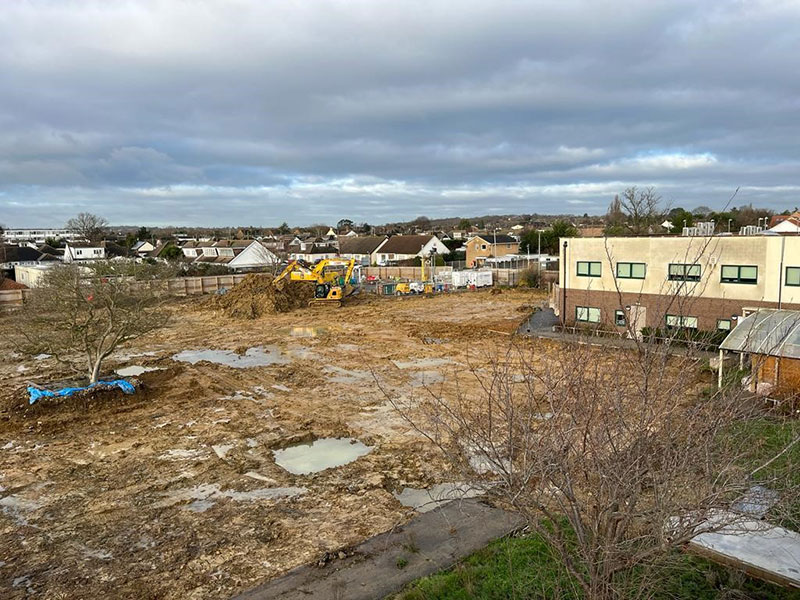
Why is asbestos soil assessment a critical step for anyone responsible for land?
So, a proper assessment process is crucial for land managers, developers, and contractors. However, In all too many cases, asbestos in soil can be overlooked. This is probably due to it being less visible than it tends to be in intact buildings, where the mineral may have been incorporated into existing insulation or roofing many decades ago.
In the event of such soil contamination being discovered, construction plans may be disrupted due to the need for unexpected remediation, or farm operations may be delayed as a result of necessary restrictions on the land’s use. Asbestos being found to be present in soil can also complicate estate management given the need for ongoing monitoring, and timelines for redevelopment may have to be extended to ensure regulatory compliance.
A structured assessment protects workers by identifying risks early. It also helps dutyholders to manage liabilities through compliance, and it supports informed decision-making on how the given land will be used.
Landowners or contractors should initiate an assessment if they suspect that asbestos may be present in the soil. For example, the site history might indicate this, or they may see debris that resembles asbestos-containing materials (ACMs).
Ideally, this assessment should take place before any ground-disturbing activities begin.
Why does asbestos in soil require a structured assessment process?
The issue of asbestos in soil becomes a particular concern when there is a risk of activities like excavation or sampling releasing fibres into the air. In situations like this, someone nearby could potentially inhale asbestos particles. This, in turn, could drive up their risk of a potentially fatal health condition, such as mesothelioma or asbestos-related lung cancer, in later life.
Typical “triggers” of an assessment process for soil include if the given site is set to undergo redevelopment, or unexpected finds occurring during groundwork. A dutyholder may also decide to arrange for such an assessment if the area was historically used for fly-tipping, or if it is a former industrial or agricultural site (where asbestos may have conceivably been used in buildings or products).
Examples of potential “dutyholders” in this context include employers and landowners. To comply with health and safety laws, dutyholders cannot depend on merely “ad-hoc” decision-making. Instead, it is crucial that they adopt a documented, risk-led approach. Doing so will help ensure the most responsibly controlled, safe, and compliant management of the site.
What do current UK regulations expect from an asbestos soil assessment?
The Control of Asbestos Regulations 2012 (CAR 2012) is the primary legal framework that dutyholders need to be concerned with in relation to the assessment of potentially asbestos-contaminated soil. This legislation stipulates that risk assessments, work plans, and controls are needed to prevent exposure during activities where asbestos in soil may be disturbed.
Waste legislation, such as the Environmental Protection Act 1990 and the Hazardous Waste Regulations, also ties into this by classifying contaminated soil as hazardous waste. Specifically, any soil with fragments of ACM, or a total asbestos content of more than 0.1% by weight, is considered hazardous.
The UK charity CL:AIRE’s guidance, including the Definition of Waste: Code of Practice (DoW CoP), provides practical interpretation for the management of asbestos in soil and construction and demolition materials. It supports on-site reuse if materials adhere to certain criteria, thereby helping to avoid unnecessary disposal.
An asbestos soil assessment is legally required when work is likely to disturb asbestos. This is in accordance with Regulation 5 of CAR 2012. It is also considered best practice to undertake an assessment during preliminary contaminated land evaluations or planning applications.
Regulators like the Health and Safety Executive (HSE) and local authorities expect reports to draw upon suitably robust methodologies, data, and risk evaluations, often aligned with standards like BS 10175 for site investigations.
How should the site history and preliminary risk assessment be carried out?
The first step should be a desk study reviewing such elements as how the land was historically used, old building records, demolition history, past landfill areas, and agricultural uses (bearing in mind the scope for asbestos to have been used in farm buildings).
This initial process is likely to include consultation of key information sources like maps, aerial photos, mineral records, and previous investigations.
Following this, conducting a site walk-over can enable the dutyholder to identify likely contamination zones, such as disturbed ground or debris.
From here, the dutyholder can begin to establish working hypotheses on potential asbestos types, such as chrysotile and amosite, as well as how deeply asbestos may be embedded in the ground. Through this process, the dutyholder may also gain a sense of possible “hotspots” for the presence of ACMs on their site.
From this point, the dutyholder should be looking to implement early risk controls for ground workers, such as personal protective equipment (PPE) and dust suppression, prior to any intrusive work getting underway.
What does a compliant site investigation strategy look like?
The site investigation strategy will need to be designed based on the risks identified in the preliminary risk assessment.
A key element of this, will be defining an appropriate sampling density for the size of the site and its intended use. A residential garden, for instance, will have a lower risk tolerance than a commercial car park.
It will be necessary for specialists to decide the best intrusive methods for the site investigation. Some examples of these processes include:
- Trial pits, which provide a quick and cost-effective means of assessing shallow contamination
- Boreholes, which are required for deeper soil profiles or where ground stability is a concern
- Grid sampling, which is used for widespread and general coverage of large areas
- Targeted sampling, which is essential for any specific hotspots, such as former waste burial pits, that the desk study may have identified.
During these operations, it will be of paramount importance to implement safe systems of work. This will guard against the risk of cross-contamination, in addition to ensuring the safety of the investigation teams.
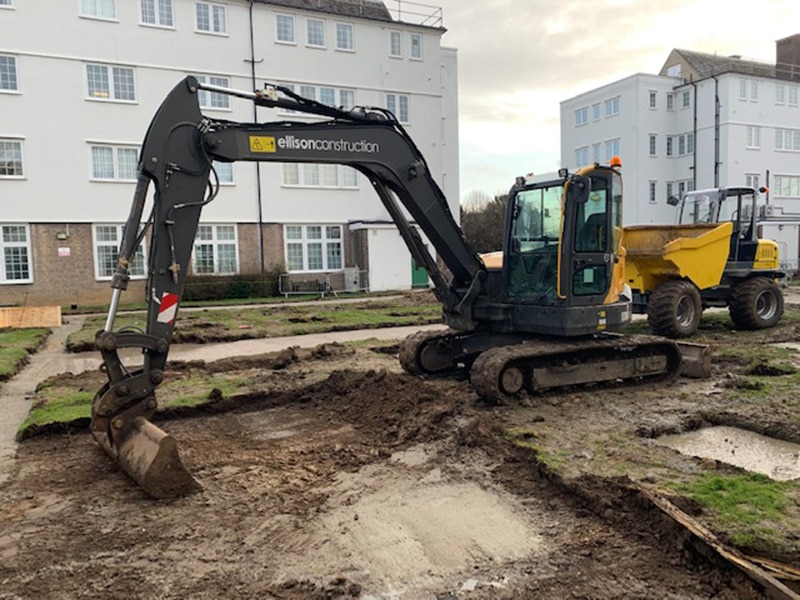
How should soil and made-ground samples be collected and logged?
A meticulous approach is essential when it comes to the collection and logging of soil and made-ground samples.
Specialists must differentiate between visible ACM fragments, such as pieces of asbestos cement sheets, and soils that may be contaminated only with microscopic fibres.
Professionals undertaking this sensitive work make detailed records of every sample location, depth, and contextual note. It is also necessary for strict procedures to be followed on-site, to make sure cross-contamination between samples does not occur.
What laboratory analysis methods are suitable for asbestos-contaminated soil?
Once captured samples arrive at the laboratory, they need to undergo specific analysis tailored for soil matrices:
- Visual screening is used for the identification and quantification of larger ACM fragments.
- Polarised light microscopy (PLM) and stereomicroscopy are standard methods used to identify certain types of asbestos.
- Detailed soil fraction analysis is often needed as a means of concentrating fibres from bulk soil samples and quantifying low levels of contamination.
Laboratories quantify the presence of asbestos, usually as a percentage of weight (%w/w) or as fibre counts. The practical difference between these two is vital to appreciate, given that even a low %w/w may still represent a significant number of airborne asbestos fibres in the event of contaminated soil being disturbed.
How should results be interpreted in a risk-focused way?
The results from the site investigation and analysis process will need to be interpreted in a way that carefully considers the specific risk.
The given site’s proposed end-use will dramatically change the interpretation. The contamination levels that would be acceptable for a commercial warehouse site, for instance, might not be acceptable for an agricultural field or a new residential development.
The assessment will have to determine whether contamination is low-risk and isolated (and therefore manageable in place), or instead high-risk and widespread (necessitating immediate remediation).
What should a professional assessment report include to satisfy regulators and dutyholders?
A robust report will be the dutyholder’s key compliance document. If regulators are to be satisfied, it will be vital for this document to include:
- A detailed methodology and sampling rationale
- Full laboratory data and accreditation details
- Site plans, photographs, and risk evaluations
- Clear recommendations for control measures, management options, and remediation routes.
If certain important elements are omitted, for example, photographic evidence is missing or there appears to be insufficient rationale for the chosen sampling locations, this can potentially cause regulators or planning authorities to reject or question the report.
What are the typical next steps after an asbestos soil assessment?
Following the assessment, dutyholders will need to act on the recommendations.
This may involve them:
- Managing the asbestos in place, working in accordance with a formal asbestos management plan (AMP) for the site
- Arranging for remediation measures encompassing such processes as excavation, segregation, on-site treatment, or off-site disposal.
Any material leaving the site must be correctly classified as hazardous waste. This, in turn, creates a need for specific disposal requirements to be followed at licensed facilities.
Conclusion: what should land managers take away about assessing asbestos in soil?
The assessment of soil for suspected asbestos is not merely a bureaucratic hurdle; it is a legal and moral imperative. By taking a structured approach, drawing upon the expertise of competent asbestos-in-soil specialists, dutyholders can greatly help to reduce their long-term costs, prevent project delays, and ensure compliance with the UK’s stringent regulations.
To request our own services in relation to asbestos-contaminated land and soil at Oracle Solutions, please don’t hesitate to contact us today.

Written by Callum McDonald
Callum McDonald is an expert in asbestos quality management, ensuring rigorous adherence to regulations and high-quality standards in removal projects. His focus on enhancing quality and client satisfaction makes him a crucial asset in safety and compliance within the field. Callum's expertise in technical support and oversight of licensed works underscores his commitment to excellence in asbestos management, providing invaluable guidance to clients in this specialised area.